

Exhaustion and Healing
Exhaustion and Healing
There’s different kinds of exhaustion people understand. Such as crisis exhaustion or depression exhaustion, even chronic illness exhaustion to a degree.
The kind that comes from surviving something hard overall. People can relate to it in a more tangible way.
But there’s another kind as well.
The quiet fatigue of staying present with yourself.
You are not falling apart, you are not in danger, you are just tire in a way the sleep doesn’t seem to fix
This usually shows up later in the healing journey. During the beginning your healing has urgency. Your still learning to regulate, function, and ultimately how to get through each day.
Progress is visible. Tangible. Sometimes even dramatic.
But over time, if you keep going, the work changes.
It’s not just trying to survive anymore. It’s working on staying with yourself, with feelings, memories, grief, and parts of yourself you once had to avoid. And that kind of staying is uniquely exhausting.
It requires something you may have never been allowed to do before: be present with pain without escaping it.
Why this stage is so tiring
Your nervous system is learning new rules:
Feeling doesn’t mean danger.
Vulnerability doesn’t mean abandonment.
Presence doesn’t lead to punishment.
That kind of relearning is slow and slow work takes a steady, almost invisible energy. It leaves you wondering why you feel so drained when nothing “bad” even happened. And the confusion of not being in crisis anymore, but still feeling like you are in a way.
This stage can feel disorienting.
You’re not where you used to be, and also not as far as you hoped. You are functioning and still fragile. While also actively healing and grieving. And in the distance your realize there really is no finish line as you expected. But deeper honest, presence, and life.
This is beautiful, tiring, and the truth most healing narratives skip.
We love stories of breakthrough, and transformation. I mean it’s so human and amazing to dream of becoming whole and free. To have a place in the sand where you can officially say “okay, I have reached the finish line.”
For some, making it into stability is the finish line, and for others the work continues as a life long pursuit. Everything is changing, but there a less and less clear milestones, just small moments when you stay present and notice.
If you feel tired during this stage though, it’s because now you are building instead of putting out fires. It takes a lot longer to notice what’s been created, so try to give yourself grace, and remember that time will show how far you have come.
-Mel
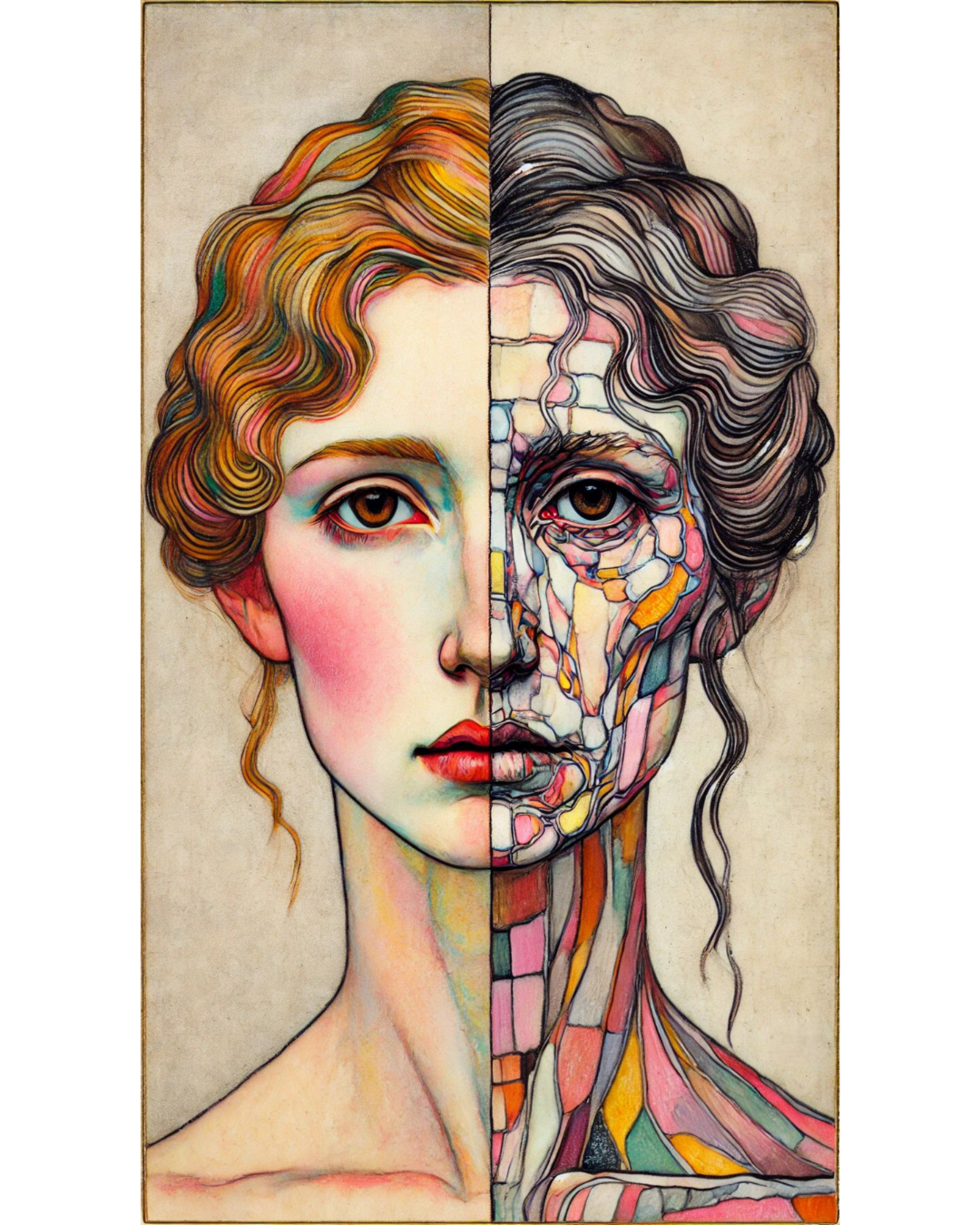
Emotional Mapping
Most of us were taught to answer the question “How do you feel?” with a single word.
Fine.
Stressed.
Anxious.
Mad.
But those words are usually placeholders. They’re not wrong, they’re just incomplete. Understanding this inside myself changed how I understood and reacted to my internal world.
Emotional mapping is the practice of slowing down enough to figure out what’s actually happening inside you, instead of forcing your experience into a socially acceptable label. It’s not about fixing your feelings. It’s about locating them, understanding their shape, and letting them exist without immediately turning them into a problem to solve.
Why Most Emotional Awareness Stops Too Early
A lot of emotional work gets stuck at identification. “I’m anxious.”, “ I’m angry.”, “I’m sad.”
That’s often where people stop, either because they think that’s the goal, or because going deeper feels overwhelming. But those words are umbrellas. Underneath them are very specific sensations, movements, memories, and impulses.
When we don’t map those layers, two things tend to happen:
We over-intellectualize our emotions and stay stuck in our head.
Or we get flooded by them and feel out of control.
Emotional mapping creates a middle ground. It gives structure without suppression.
What Emotional Mapping Actually Is
Emotional Mapping is a process of describing your internal experience as it is, using three main anchors:
Sensation – What does it physically feel like?
Location – Where do you feel it in your body?
Quality & Movement – How does it behave?
Instead of asking “What’s wrong with me?”, you’re asking:
Is this tight or heavy?
Is it sharp or dull?
Is it pulsing, buzzing, sinking, pushing?
This matters because the nervous system responds to specificity. Vague distress keeps us activated, where clear description creates containment.
Why Adjectives Matter More Than Explanations
We’re often trained to explain emotions instead of describing them. “I’m anxious because my boss said—”, “I’m angry because they didn’t—”
Sure, explanation's can be helpful later. But early on, it often pulls us into stories, blame, or spirals as we try to create reasoning.
Adjectives bring you back into your body. It’s the difference between “I’m anxious” and “There’s a prickly, electric tightness behind my sternum that keeps pulsing outward”
The second one does something different neurologically. It grounds the experience. It turns the emotion into something you can sit next to instead of something that hijacks you, making it legible and validated.
Location Changes Everything
One of the most overlooked parts of emotional awareness is where the feeling lives.
Anger in the jaw feels different than anger in the chest. Just like sadness in the throat is different than sadness in the gut. This will be a unique experience for each person but will show up in patterns for the individual.
When people say “I don’t know what I’m feeling,” they often mean:
“I haven’t learned how to locate or describe it.”
Location gives the emotion boundaries and therefore makes them less overwhelming.
Emotions Aren’t Static
Another reason emotions feel confusing is because we expect them to stay still and they don’t. They can expand, contract, pulse, migrate and many other things.
Emotional mapping allows the movement without panic. The goal isn’t to trap the feeling, it’s to track it.
For example:
“The pressure in my chest is slowly sliding upward toward my throat.”
“The heaviness in my stomach comes in waves, then eases for a few seconds.”
“There’s a pushing sensation in my shoulders, like I want to shove something away.”
When you map movement, you start understanding what your system is trying to communicate with out immediately needing to act it out.
This Is Why Emotional Mapping Reduces Reactivity
When emotions stay unnamed and unmapped, they tend to come out in other ways:
Snapping at someone
Shutting down
Over-explaining
Freezing
Dissociating
Mapping doesn’t make emotions disappear, it simply makes them less likely to hijack your behavior because you can recognize them. When an emotion feels witnessed, it usually softens on its own, just by sitting with it an watching it.
Emotional Mapping in Invalidation Growing Up
If your emotions were dismissed, minimized, punished, or pathologized, you may have learned to distrust your internal experience. Emotional mapping rebuilds that trust quietly.
By mapping your telling yourself:
“I believe what I’m feeling is real enough to describe.”
“I don’t need permission to notice this.”
“I can stay present with my experience without making it mean something bad about me.”
Attuning to your experience and helping create an internal relationship.
A Simple Way to Practice
You don’t need a perfect emotional vocabulary. You don’t need to do this for an hour. Start small.
Try this:
Pause for 30 seconds
Ask: What sensation is strongest right now?
Name one adjective
Name one location
Name one movement or quality, if there is one
That’s it.
We don’t want to assign reasons, beliefs, or conclusions when doing this, just acknowledging that it exists is the first step to creating an understanding in itself.
The Point Isn’t Clarity. It’s Relationship.
Emotional mapping isn’t about reaching emotional mastery or always knowing the “right” feeling.
It’s about building a relationship with your internal world that’s honest, grounded, and non-violent.
You’re not trying to control your emotions.
You’re learning how to listen without panic.
And over time, that changes everything.
The Holiday Hum Drum
Ah the holidays, a joyous and occasionally stressful time for most, and for those of us with family trauma…well less than exciting at times. Most holidays for me are spent reflecting about my childhood, the mixed emotions of what a gift really implies, and the reasoning behind family gatherings.
Like many others, it’s hard to sit at the intersection of loving my family, and feeling like holidays gloss over the reality. For me, it sends me into doubt. Doubt around my reality, if what I remember is true, and trying to calm the frayed edges of things I thought were trimmed clean long ago.
My family has always been focused on image and what can be seen from the outside perspective. Almost like a photograph in some ways, the Christmas tree lit up, the stockings hung, and the kitchen bustling with activity. People smiling as they talk about there jobs, laugh joyfully at the children’s glee; the illusion of the perfect family.
We ignore the slight disfunction under the surface. The energy that hits a slight twang. The edge in the air.
It’s just normal enough.
In that moment, the times it’s felt weird to share about yourself settle, the worries ease, and the eggshells become sand under your feet.
Until it’s not.
Until a comment lands just slightly off.
Until a memory stirs that doesn’t match the story being told at the table.
Until your body tightens before your mind can catch up.
And suddenly you’re back in that familiar place. Wondering if you’re imagining the tension. If you’re being too sensitive. If this is just what families are like and you’re the one who never learned how to play along.
That’s the dissonance of it. It’s the way everything looks fine, while something inside you is bracing for impact. It’s how quickly the ground can shift from sand to glass.
Holidays don’t create these feelings. They expose them.
They highlight the gap between how things look and how they truly felt. Between what was celebrated and what was survived. Between the version of the family that exists in photos and the one that lives in your nervous system.
Loving your family doesn’t erase what happened.
Missing them doesn’t rewrite the past.
And feeling unsettled in these moments doesn’t mean you’re ungrateful, broken, or wrong.
There’s just a large group of people that would rather ignore it than feel it.
So if the holidays leave you reflective, raw, or oddly untethered, it’s not weird and it makes complete sense. You’re responding honestly to a history that was never fully acknowledged. You’re sitting with the reality instead of smoothing it over for comfort.
And that, uncomfortable as it is, is its own kind of gift to yourself.
To the you that remembers.
You don’t have to resolve it this season.
You don’t have to explain it to anyone at the table.
Sometimes the bravest thing you can do during the holidays is simply notice what’s real, and let yourself stand in it without pretending it’s anything else.
Welcome to my Healing Journey…
It all begins with an idea.

“The only way out is through”
-Robert Frost
Hey, I’m Mel.
This entire site has taken me a long time to build, and I am really excited to start sharing what I have learned while healing from CPTSD, the tools that have helped me the most, and the stories of my life. Welcome, and I hope you stay tuned for more.
Anxiety, depression, and my emotions have spent most of my life ruling my world. They shaped the way I interacted with life, how I showed up, and the choices I made. There is no part of my life they did not touch. What I once believed was a chronic sense of generalized anxiety and moderate depression turned out to be much more complex. While CPTSD is not formally recognized in the United States as part of the DSM-5, it is recognized in other countries, including those in Europe, as a separate diagnosis. There is already significant evidence supporting CPTSD as its own distinct condition, with more on the way. Hopefully, in the future, this will change and CPTSD will be recognized for the complex issue it truly is.
No one goes through life untouched by trauma, although some of us experience more and others less. Our resilience, tolerance, and emotional capacity vary from person to person. This is not a reflection of someone’s worth, but rather a reminder of how uniquely each of us is wired and how much thoughtful, tailored care we need. Many of us grew up without emotional coping skills beyond suppression and without real safety to express what we felt. Because of this, we often end up in a painful paradox. We are wired for connection as human beings, yet the very connection we need becomes something we fear.
Fear leaves us unstable in our relationships. It pushes us to make assumptions about who we are and how others see us, tinting the lens through which we view the world. This lens breeds anger. Sometimes it turns inward. Sometimes it moves outward onto the world around us.
This is where help becomes essential. We need someone who can help us navigate our inner world with a clearer lens and guide us back to our true sense of self.
When you focus on understanding and listening to yourself, change happens naturally. You begin to hear the thoughts you never allowed yourself to feel. You slowly find language for the fears that once felt too overwhelming to touch.
This is how I went from growing up in an abusive household, constantly on edge, and hating myself, to finding a genuine love for who I am and what I offer. I learned to ease the pressure I placed on myself and quiet the intensely assertive inner critic that once ran my life. Through parts work, I earned the trust of the parts of me that never had it and allowed more of my true self to come forward.
Instead of being knocked down by every difficulty, I learned how to sit with tolerable discomfort.
This is the point where healing truly takes off. And this is a place you can reach too.
In my next blog, I will talk about how CBT, parts work, somatic therapy, and EMDR helped me find that space. Keep your head up, and I look forward to seeing you next time.
Mel